


OMG is this a distressing — and well-documented — piece by Charles Marohn at Strong Towns on one reason kids are walking and biking to school less and less:
Time and again, communities choose to build schools on the cheapest available land, typically at the edge of town, far removed from where families actually live. This choice reduces upfront costs, but it pushes ongoing burdens onto everyone else: parents navigating daily traffic jams, school staff with extended commutes, and taxpayers at every level who end up funding the infrastructure needed to make these sites marginally functional.
The piece is reprinted and lightly edited below, with such damning examples you may want to go and change the way everything is done when choosing a school site. Sounds good to me!
Why Johnny Can’t Walk to School
When a school is placed miles away from the families it serves, the consequences show up immediately.
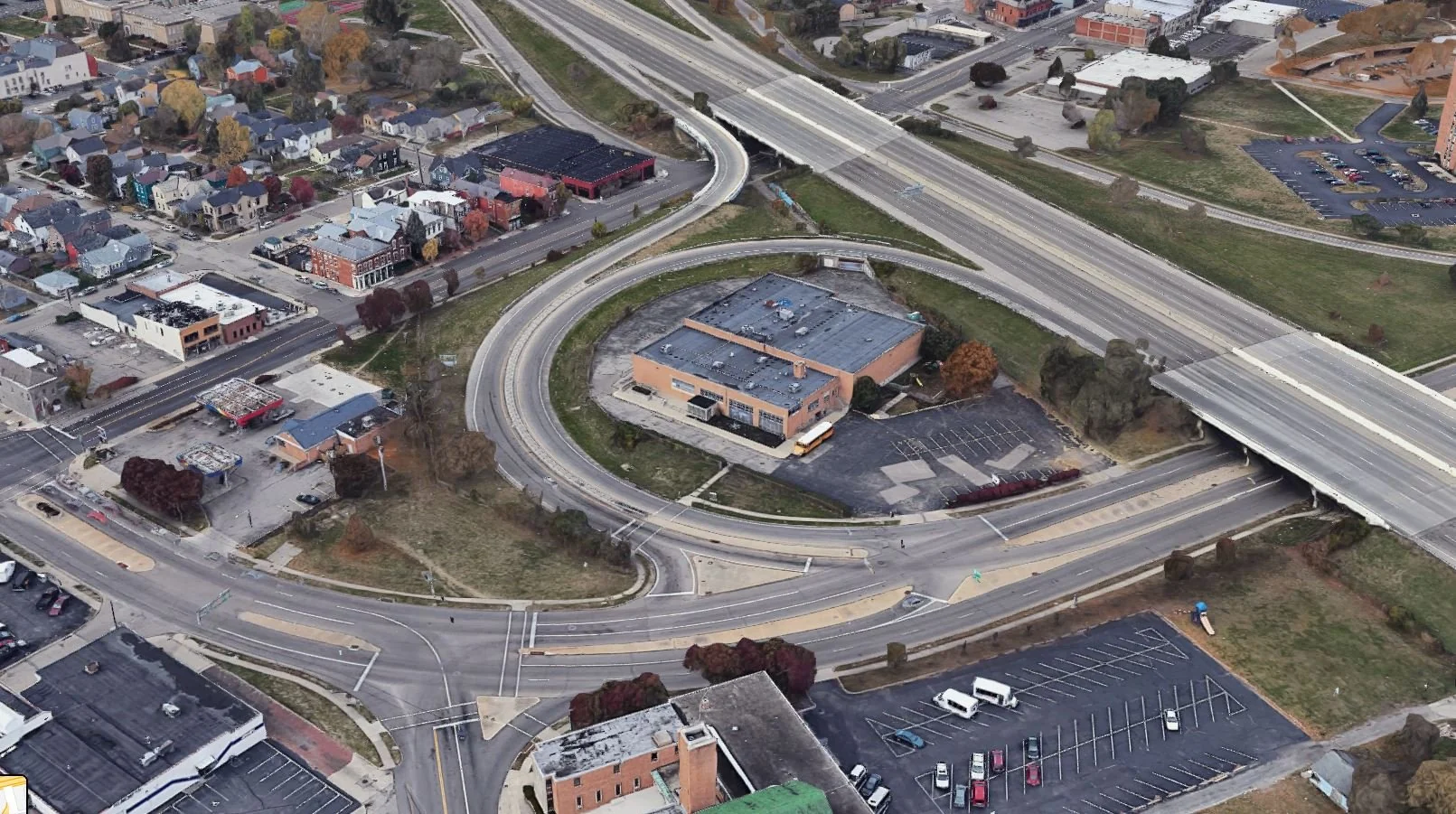
Dayton SMART Elementary, a K-6 charter school in Dayton, Ohio.
Across the country, school districts consistently make a calculated decision: they build new schools on the far edge of town, on land chosen not for its proximity to students or its connection to neighborhoods, but for its low sticker price and regulatory ease. These decisions almost always rely on one critical assumption: that someone else will pay to make the site accessible. That “someone else” is usually the state and federal governments.
When local officials plan for new schools, they often count on federal dollars to provide the roads, signals, and safety features needed to make isolated sites accessible. This expectation creates a feedback loop: choose the cheap land on the edge of town, and rely on outside money to make it work. Over time, this strategy has become standard practice, not because it’s the best choice for students or communities, but because the funding systems generally reward it. For students, this often means longer commutes, less independence, and fewer opportunities for physical activity and social interaction on the way to and from school. For families, it adds complexity and cost — having to coordinate drop-offs, navigate traffic, or trust in long bus routes that stretch already packed schedules.
Situating schools far from the communities they serve makes education less a part of daily neighborhood life and more of a destination managed by logistics. Students are treated less like small humans we are trying to nurture into maturity, and more like UPS packages to be routed and delivered on time.
A Hard Lesson in Small Town Arizona
Federal infrastructure programs favor visibility over nuance, and one-time appropriations over long-term practicality.
The town of Pima, Arizona (population: 2,847) learned this lesson the hard way. When construction began on a new high school — only the second in the town’s 145-year history — it was placed on a 44-acre parcel next to a highway, with no practical way to get there. This new campus replaced a traditional neighborhood school, one where access was not an issue and students could reasonably walk or bike.
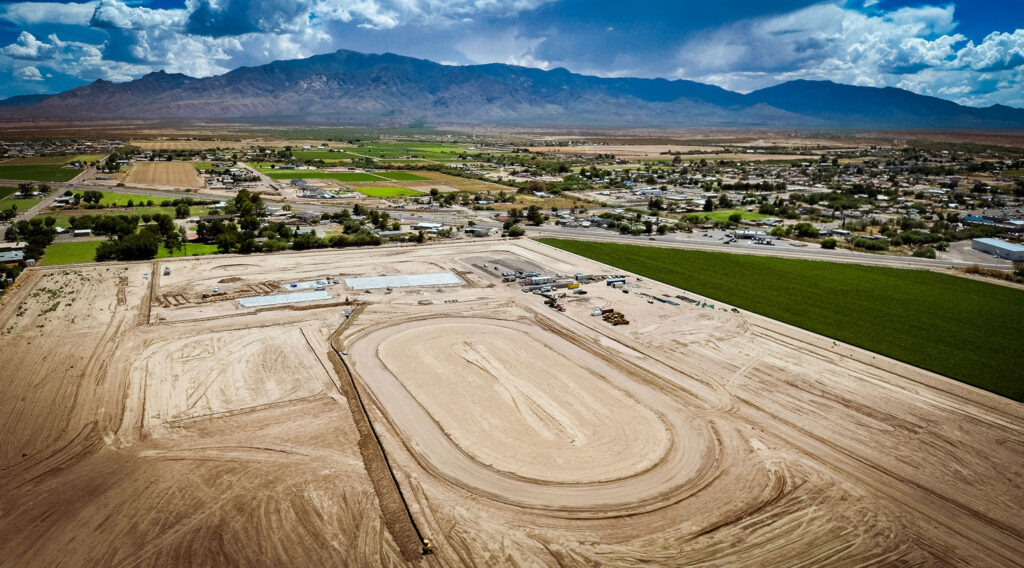
Rather than reinvest in a site already embedded within the community, the district chose a location that immediately introduced access challenges, requiring major infrastructure just to make the site usable. To address their accessibility problem, local officials sought and secured a $1 million federal grant to build the access road and traffic light that would make the school functional. Then, as part of a broader budget deal in Washington, the grant disappeared. The town was left with a school that students couldn’t safely reach, and no clear way to open it.
Short Term Gains, Long Term Misery
This story is not an aberration. It’s a clear example of how local leaders, working within a system shaped by external funding incentives, make strategic choices that prioritize short-term cost savings over long-term accessibility. In Pima, officials didn’t simply overlook the needs of students and families — they made a deliberate decision to place the new high school on remote land and count on federal infrastructure funding to make it viable.
That gamble didn’t pay off. But even if it had, the result would have still been a school that was harder to reach than the one it replaced. The failure here is not just in lost funding, but in building a public asset that depends on complex logistics and fragile support instead of serving the people right where they are.
Remote by Design, Dependent by Default
Time and again, communities choose to build schools on the cheapest available land, typically at the edge of town, far removed from where families actually live. This choice reduces upfront costs, but it pushes ongoing burdens onto everyone else: parents navigating daily traffic jams, school staff with extended commutes, and taxpayers at every level who end up funding the infrastructure needed to make these sites marginally functional.
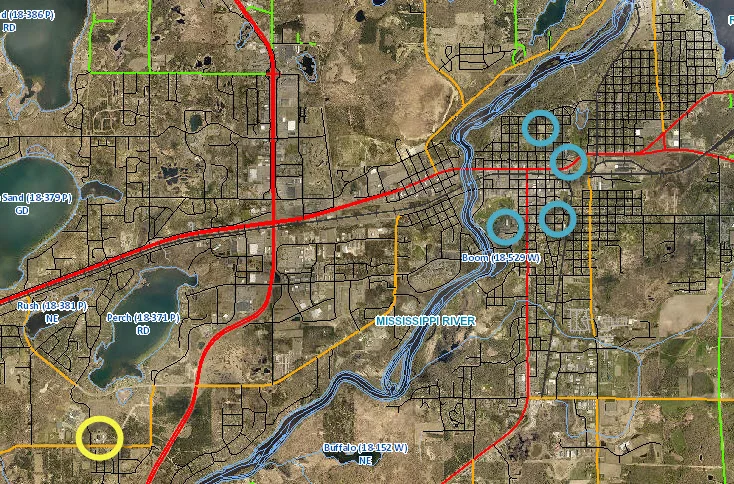
Forestview Middle School and Eagleview Elementary, two large campus-style schools in central Minnesota, are prime examples. Each occupies a remote site, selected not for proximity to students or neighborhoods, but for cost and construction convenience. No safe routes existed to these sites when they opened, and none were planned. As a result, students can’t safely walk or bike, and parents must contend with the vehicle congestion that this isolation creates.
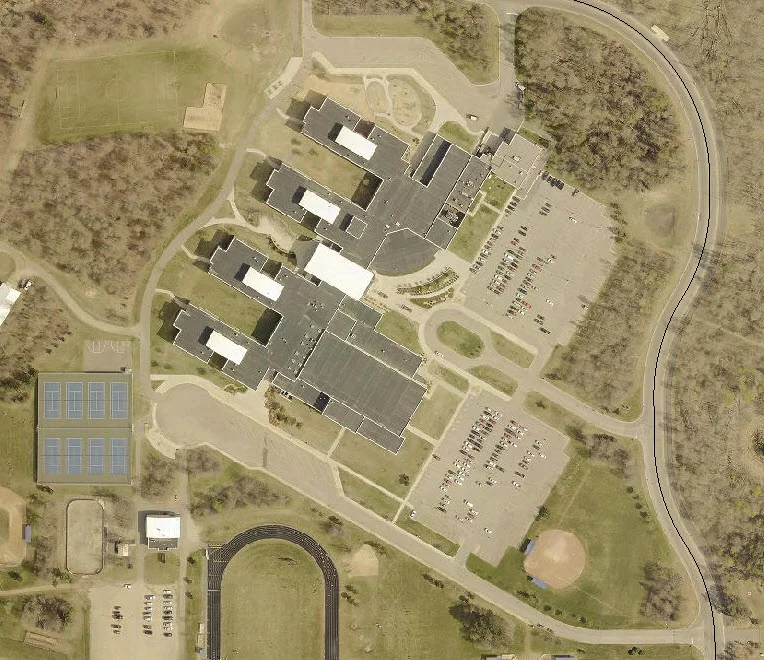
To make these facilities usable, both districts relied on state and federal transportation dollars to build the necessary road infrastructure. And now, after-the-fact, both are pursuing Safe Routes to School grants to retrofit walkability into places where walking was never considered in the original design.
The logic is entirely backward: instead of building a school on a safe route, we build it in an inaccessible location and then look to higher levels of government to patch the problem later.
It Doesn’t Have to be This Way
A more resilient system would start by recognizing a hard truth of the federal government’s role in local transportation spending: much of today’s spending is being used to fix problems that previous rounds of spending helped create. We’re compensating.
The better investment is upstream: site selection. Neighborhood integration. A humble return to empowering local communities to think critically and design solutions that reflect their own context, values, and needs.
LINK: https://www.strongtowns.org/journal/2025-12-18-the-real-reason-safe-routes-to-school-cant-keep-up
NOTE: The work of Strong Towns is performed under a Creative Commons Attribution-ShareAlike 4.0 International License. Please share with others to use for good.
2 Comments
Where I live, in a small city in southern California, new schools are built on former agricultural land (citrus) on the edge of town, but they are all accessible by roads and close enough to residential areas that kids could walk or ride bikes, if it was allowed. The older, pre-WWII schools were built while the town was in its original phase of development, and their sites were integrated into the plan. The only way a new school could be built closer to residential neighborhoods in most cities today would be to seize and condemn large tracts of 20 to 40 acres or more of existing housing for a school site, which would not only throw the lives of the people who were forced to move into chaos, but would mean living next to a huge construction site for the remaining residents of the area for years, and having increased traffic forever. In older cities, it would mean the loss of hundreds of historically and/or architecturally significant houses. The only solution, in most cases, is to build new schools farther from the city’s residential center on unused or agricultural land.
Oh, my. I have mixed feelings about this one.
I’m 100% with you on all issues of child independence. If a child lives within walking distance from the school, then that child should be allowed / encouraged / required to walk.
But there is a problem with schools serving their local walk-able communities. The problem is that such communities tend to be very segregated, both by race and by socio-economic class. So the schools end up similarly segregated.
Feel free to stop reading now—I’ve made my point—but for anyone up for more, here’s my story. I started first grade in Raleigh, NC in 1972. That happened to be the first year that Raleigh, NC started busing kids all over town instead of sending them to their local schools. So my parents got the word that instead of going to the walkably-near Effie Green, I would be bused across town to Mary E. Phillips, a very old school in a very Black neighborhood.
So all the Moms in my (North Raleigh middle-class white) neighborhood trekked across town to take a look, and they were horrified by what they saw. The playground equipment was rusting and falling down. The school hadn’t been painted in years. The library was barren. And so an army of Moms spent the summer painting and building and fund-raising and buying books, and the school got a long-needed makeover, and that’s where I went from first through fifth grades.
So my point is just that there are real and legitimate reasons that led to a massive crosstown busing system instead of just walking to local schools, and we want to be circumspect before giving them up.